
Community service rooted in
compassion and care.
Ihsan Circle helps Muslim communities imagine a more structured way for volunteers to support elders, families, and neighbours through companionship, visiting, practical help, and acts of service — without turning volunteers into regulated care providers.
Sometimes support begins with showing up.
Muslim families navigating home care, senior care, elder support, or caregiver stress may need more than formal services. They may also need community connection, companionship, reassurance, and people who remember them.
Ihsan Circle is being built to help masjids and Muslim communities explore safer, clearer ways for volunteers to serve — through non-regulated support that honours dignity, protects boundaries, and keeps care responsibilities in the right places.
A meaningful role, with clear boundaries.
Volunteers can be a beautiful part of Muslim community caregiving when the role is clearly defined and does not drift into regulated home care, clinical care, or caregiver employment.
Visit and accompany
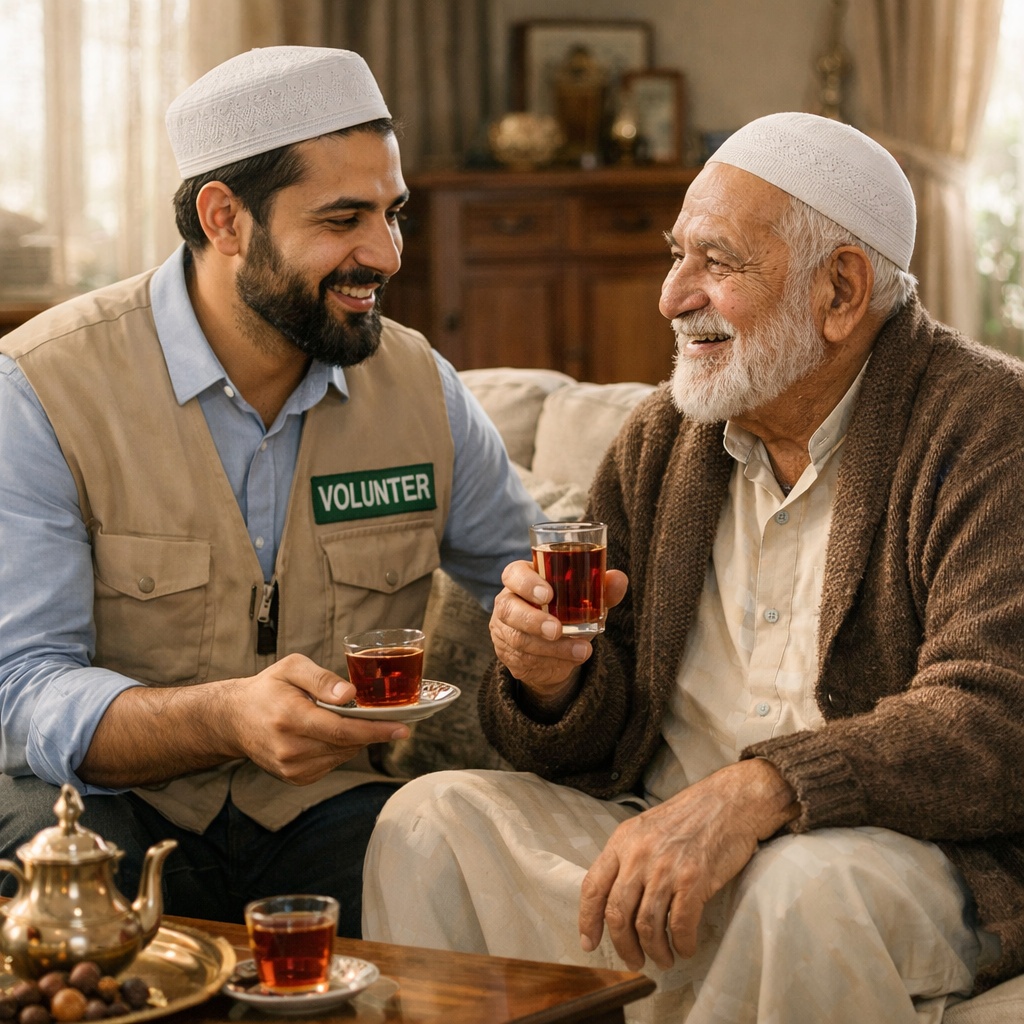
Volunteers may support companionship, friendly visiting, conversation, and helping elders feel connected to the community.
Reduce isolation
Regular community connection can help families and elders feel less forgotten during difficult seasons of care.
Support practical kindness
Volunteer pathways may include non-regulated help such as check-ins, meals, rides to community events, or family encouragement.
Respect care boundaries
Volunteers do not provide regulated care, clinical tasks, personal care, medication support, or formal care-plan services.
Muslim caregiving support is not only about services. It is also about belonging.
Many elders and families need human connection alongside formal home care or senior support. A structured volunteer pathway can help communities respond with compassion while protecting both the volunteer and the family.
This is especially important for Muslim elders who may value prayer, modesty, halal food, language, cultural familiarity, and community ties. Volunteers can help keep those connections alive without replacing licensed care partners.
Companionship
A visit, tea, and presence can carry deep emotional meaning for elders who feel alone.
Community connection
Volunteers help elders and families stay connected to the masjid and Muslim community.
Family encouragement
Families carrying caregiving pressure feel supported when the community remembers them.
Non-regulated support
Volunteer service stays clearly separate from regulated care, employment, and health records.
Volunteers are not a substitute for licensed home care.
Ihsan Circle is designed to protect the volunteer role by keeping it clear, community-centred, and non-regulated. If a family needs regulated home care, personal care, clinical support, scheduling, billing, employment supervision, or care records, those responsibilities belong with licensed care partners.
Start a Volunteer Conversation →Volunteers do not:
- Provide medical or clinical care — no nursing, medication, wound care, or clinical tasks
- Provide personal care — bathing, toileting, transferring, and care-plan tasks belong with care providers
- Collect sensitive documents — health records, ID documents, and background checks are not part of this pathway
- Replace licensed care partners — when formal regulated care is needed, the right pathway is through a licensed agency
Small acts of service can restore a sense of connection.
Volunteer support can be simple, human, and deeply meaningful — a visit, a check-in, a ride, a meal, or helping someone feel less alone.
Visiting elders
Friendly visits, conversation, Qur'an recitation where appropriate, tea, and companionship for elders who may feel isolated from their community.
Supporting families
Encouragement, check-ins, meal support, or practical non-regulated help for families carrying caregiving pressure quietly and alone.
Community connection
Helping elders and families remain connected to masjid life, community relationships, and trusted Muslim support networks in their area.
Interested in volunteer support through Ihsan Circle?
Reach out to begin a general conversation about community service, volunteer coordination, Muslim elder support, and safe role boundaries.