
A bounded, meaningful role in
Muslim family caregiving.
Ihsan Circle helps masjids explore a clear, bounded way to support families navigating home care, senior care, and elder support — without asking the masjid to become a care provider or health-record system.
Families often ask for help where they already feel known.
For many Muslim families, the masjid is more than a place of worship. It is a trusted community anchor, a place of guidance, a source of belonging, and often the first place families turn when life becomes difficult.
Ihsan Circle is being built to help masjids respond to caregiving needs with structure, clarity, and safe role boundaries. The goal is not to place clinical or regulated care responsibilities on the masjid. The goal is to create a thoughtful pathway where families can begin the right conversation and be connected to appropriate next steps.
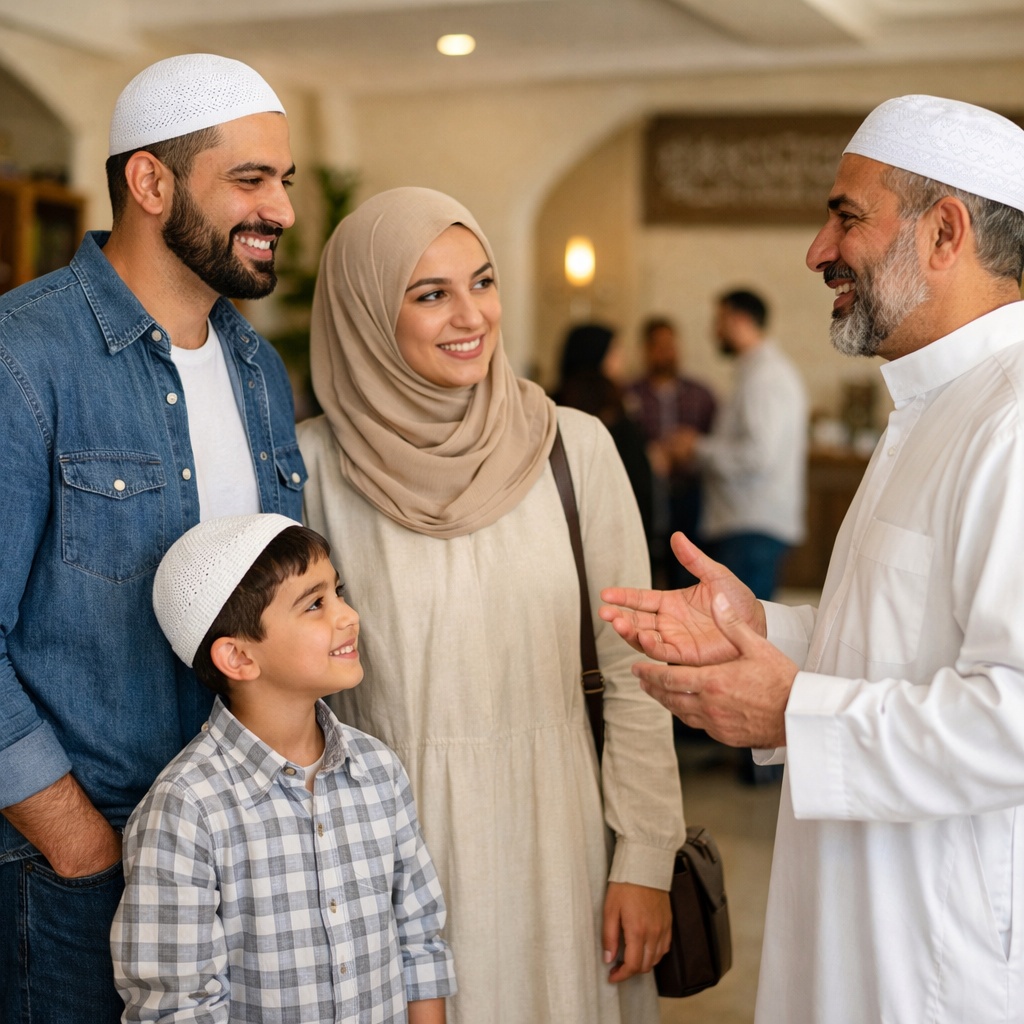
A bounded role that protects families, masjids, and care partners.
The Ihsan Circle model gives masjids a meaningful community role without blurring responsibilities that belong to licensed care providers.
Community-facing trust
The masjid helps families begin from a familiar and values-centred place rather than a cold or confusing system.
General guidance
Families can be directed toward general conversation pathways, educational resources, and appropriate next steps.
Volunteer coordination
Masjids may help organize non-regulated community support such as visiting, companionship, and practical acts of service.
Licensed partner connection
Where regulated home care may be needed, licensed care partners remain responsible for intake and care operations.
Muslim elder care support should not depend on families carrying everything alone.
Many families are trying to understand senior care, home care options, caregiver support, and community help while also carrying emotional, spiritual, and practical pressure.
A masjid-anchored caregiving pathway can help families feel less isolated. It can also help the community respond with compassion and structure, while still respecting professional boundaries and the responsibilities of licensed home care partners.
Families feel seen
Care conversations can begin in a trusted Muslim community context where families already feel known.
Volunteers have structure
Community service can be organized thoughtfully without drifting into regulated care territory.
Care partners stay responsible
Licensed agencies carry regulated care, employment, records, and clinical systems.
The masjid role stays protected
The masjid can support trust and connection without becoming a care provider.
What masjid partnership does — and does not — mean.
Ihsan Circle is designed to make masjid involvement safer and clearer. The purpose is to create a community-facing pathway, not to turn the masjid into a care provider, employment agency, record holder, or verification system.
The masjid does not provide regulated care
Licensed care partners remain responsible for care services where required.
The masjid does not hold health records
Sensitive health information and care records belong in appropriate regulated systems.
The masjid does not employ caregivers
Employment and supervision remain with licensed agency partners where care services are involved.
The masjid can support community connection
This may include trusted introductions, volunteer support, pastoral care, and family encouragement.
A practical starting point for Muslim community caregiving.
Family-facing pathways
How families can begin general home care or elder support conversations without submitting sensitive information too early or feeling overwhelmed.
Volunteer service models
How non-regulated volunteer support may be organized around visiting, companionship, meals, check-ins, or practical community help.
Licensed partner collaboration
How the community pathway can connect with licensed care partners while preserving care, employment, and record responsibilities where they belong.
Interested in exploring Ihsan Circle for your masjid?
Reach out to begin a general conversation about masjid partnership, Muslim family caregiving, volunteer coordination, and licensed care partner collaboration.